
AVAILABLE NOW ON AMAZON
![Grateful to Be Alive: My Road to Recovery from Addiction by [D.K. Sanz]](https://m.media-amazon.com/images/I/41pjKqt1LzL.jpg)
You will find paperback edition here for now: GRATEFUL TO BE ALIVE (Paperback)
You will find paperback edition here for now: GRATEFUL TO BE ALIVE (Paperback)

One of the most significant concepts of the 12-step program of recovery can be difficult for those whose beliefs don’t align with the typical vision.
I remember being told in meetings that “EGO” was, essentially, “edging God out.” Not mentioning “Him” or crediting “Him” for your success in staying sober would raise many eyebrows.
We were told that “A.A. works for people who believe in God. A.A. works for people who don’t believe in God. A.A. never works for people who think they are God.”
I was also taught, in meetings, that “A.A. isn’t a religion. We can’t open the gates of Heaven and let you in, but we can open the gates of Hell and let you out.”
All of it confused me, as a newcomer, all those years ago.
The program literature clearly states that we surrender to a power greater than ourselves—as we understood that greater power to be. It’s important because we’re told that our journey to wellness begins only when we surrender to that higher power.
Sure, for many people, that is the Abrahamic God. Others rely on the deity or deities of a different faith. And, for some of us, there is our ancestral religion and the polytheistic or pantheistic worship of nature as the divine.
The program was never meant to exclude atheists or agnostics, either. They may see their higher power as their higher consciousness and moral compass. You don’t need a religion to have either of those things.
God can even be a celebration of all that is good, believing all that is good is God. GOD, as many have said, also stands for “good orderly direction.”
When we look at it that way, the program’s God-related slogans apply, regardless of our vision of the divine.
Let Go and Let God.
Trust God.
If God seems far away, who moved?
But for the Grace of God, there go I.
And because we are advised to pray daily, we are reminded, in the program, that trying to pray is praying, and that prayer can be well wishes, good thoughts, positive energy, and just sending love and light.
Spirituality is the ability to get our minds off ourselves and to rely on better judgment, regardless of where that comes from on a day-to-day basis. And just wanting to be a decent human being counts. It counts a lot.
Feature photo at the top by Artem Sapegin on Unsplash
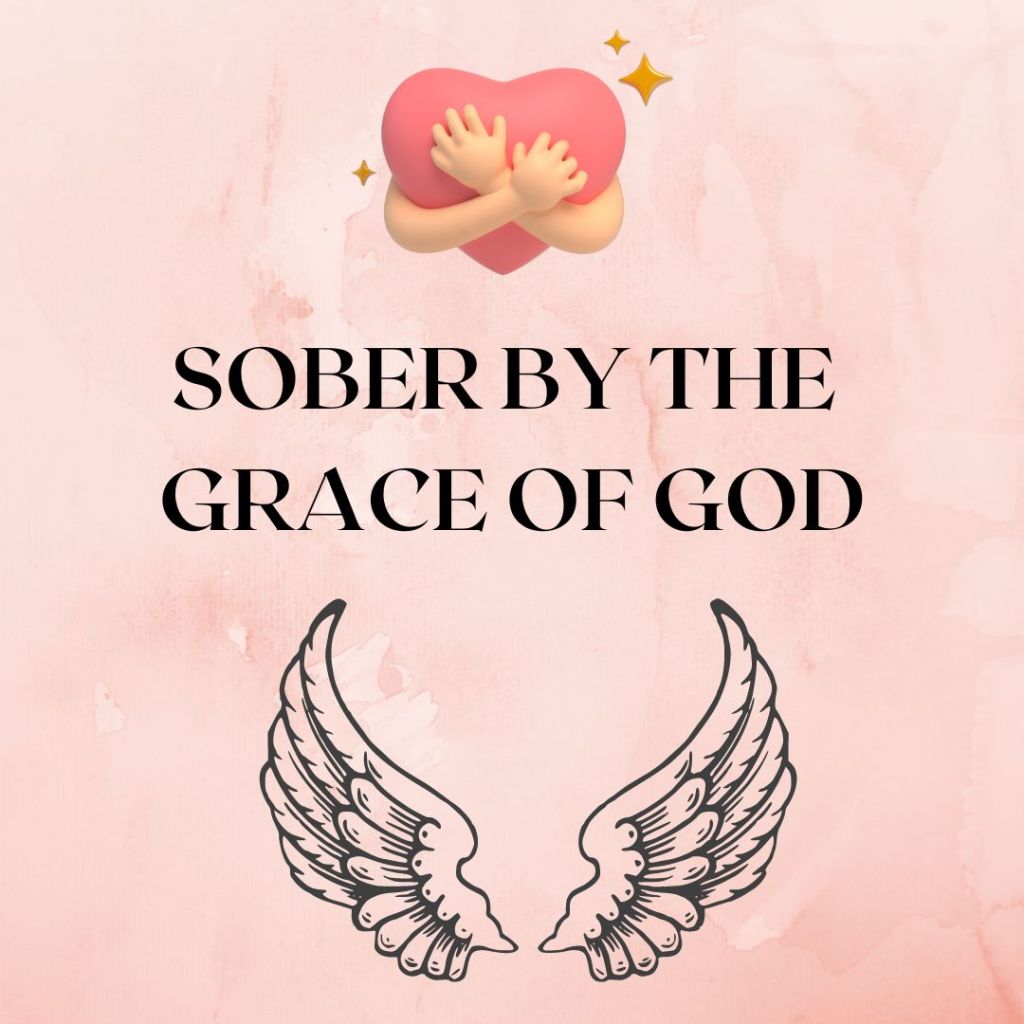
Sober graphic made by D.K. Sanz on Canva

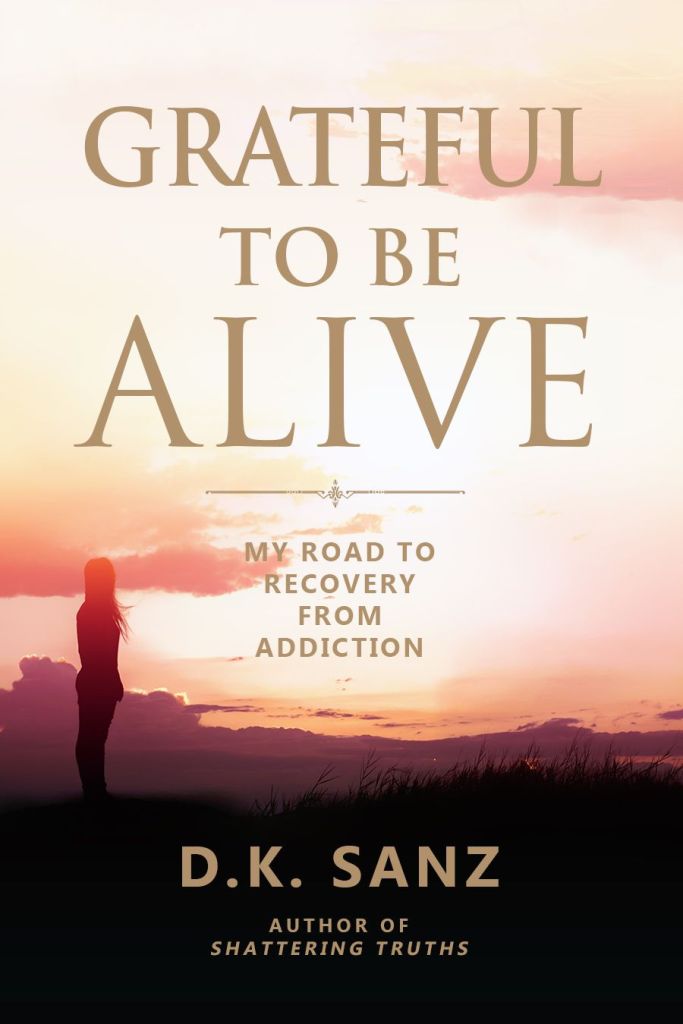
Do unsettling truths bring harsh judgment? They do, but the price of denial is steep.
D.K. Sanz’s story begins in the drug-infested New York City streets of Woodside, Queens, during the tumultuous HIV/AIDS pandemic of the Eighties and Nineties. It offers a glimpse into how a now often-overlooked pandemic impacted Sanz’s nuclear family.
From her earliest days, Sanz was the easily forgotten stranger, always a little out of sync with the rest of the world—a tough but naive kid and aspiring writer. Her triumph over illness and addiction includes amusing anecdotes and nostalgic, heartwarming memories.
Deep-dive into Sanz’s confessional self-sabotage, self-destruction, and the harrowing downward spiral she almost didn’t survive. Her never-before-told story ranges from recklessness and impudence to empathy, forgiveness, and love.
Sanz has since published several books under the name Kyrian Lyndon, primarily poetry but also a novel, and she continues to work on sequels and an all-new fantasy series. You’ll find some of her poetry at the end of this book.
Whether struggling or not, you will find Grateful to be Alive is a story of hope, defying insurmountable odds, finding joy, and a gradual transition toward authenticity and becoming the person Sanz always wanted to be.
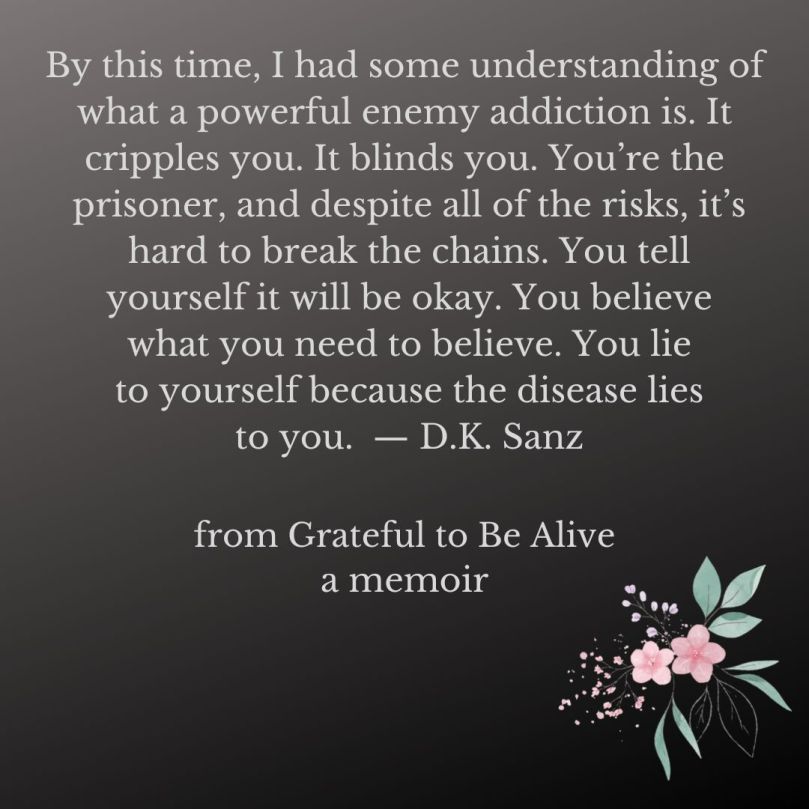
“Addiction, at its worst, is akin to having Stockholm Syndrome. You’re like a hostage who has developed an irrational affection for your captor. They can abuse you, torture you, even threaten to kill you, and you’ll remain inexplicably and disturbingly loyal.” -Anne Clendening
Addiction is the only prison where the locks are on the inside. — Unknown
Feature image at the top by Khusen Rustamov from Pixabay

Beauty is not in the face; beauty is a light in the heart. – Khalil Gibran
It is time for parents to teach young people early on that in diversity there is beauty and there is strength. – Maya Angelou
Do unsettling truths bring harsh judgment? They do, but the price of denial is steep.
D.K. Sanz’s story begins in the drug-infested New York City streets of Woodside, Queens, during the tumultuous HIV/AIDS pandemic of the 80s and 90s. It offers a glimpse into how a now often-overlooked pandemic impacted Sanz’s nuclear family.
From her earliest days, D.K. was the easily forgotten stranger, always a little out of sync with the rest of the world—a tough but naïve kid and aspiring writer. Her triumph over illness and addiction includes amusing anecdotes and nostalgic, heartwarming memories.
Grateful to be Alive delves deep into Sanz’s confessional self-sabotage, self-destruction, and the harrowing downward spiral she almost didn’t survive. Her never-before-told story ranges from recklessness and impudence to empathy, forgiveness, and love.
D.K. has since published several books, primarily poetry but also a novel, and she continues to work on sequels and an all-new fantasy series. You’ll find some of her poetry at the end of this book.
Whether struggling or not, you will find Grateful to Be Alive is a story of hope, defying insurmountable odds, finding joy, and a gradual transition toward authenticity and becoming the person D.K. always wanted to be.
“When you begin this book, you will not put it down. You will immediately be drawn into Sanz’s bold narrative of a woman, throughout her life, passing through “every forbidden door,” as she says of herself. It is a book of continual growth through experience, defeat, and triumph. The prose is swift, concise, full of irony, truth, and poise. You will not find a more startling, revealing memoir. Highly, highly recommended.” ~ Jason T. Masters
If you are interested in obtaining an ARC copy, please e-mail me at dksanz@yahoo.com.
There was a time when the people I dealt with were merely making appearances in the soap opera that was my life, or so I must have believed on some level. I starred in it, directed it, and expected each actor to play their role as I created it. Under these circumstances, less-than-favorable outcomes are magnified and often unendurable. Even petty slights are infuriating and upsetting.
In twelve-step programs, it’s called “Rule 62”—Don’t Take Yourself So Seriously! Becoming aware of that and then understanding it and accepting it was another thing pivotal to my recovery.
We have to be able to laugh at ourselves! Have you ever noticed that people who take themselves too seriously are the perfect target for internet trolls? I observed one guy on Twitter complaining that trolls wouldn’t leave him alone. It was evident from his feed that he’d been sitting around, answering them for quite some time. That is a waste of energy because trolls are devoid of empathy.
Bullies tend to throw stuff out there to see what will stick. They know it when they hit a nerve, and they’ll use that to provoke you. The more misery they cause, the happier they are. These are not people you can reason with or convince. If they can’t get a rise out of you, it’s not fun for them. So, it’s best never to “feed a troll”—not so much as a crumb.
We don’t have to tolerate bad behavior, but we don’t have to live in agony because of other people’s behavior and perceptions. And we don’t have to be obsessed with damage control. That’s a full-time job, with plenty of unpaid overtime. And it’s exhausting! Allowing people to infuriate us and rob us of our serenity gives others way too much power over us. Humility saves us from ourselves, keeping us aware that we’re human and flawed.
Before I understood Rule 62, I told someone, “It’s not that I want to be better than others. It’s the opposite; I strive to be acceptable because I feel inadequate.”
Inadequate in my view because I aimed for perfection. I didn’t understand that I wore my inferiority complex inside out. I’d taken it to the superiority complex level, never realizing that those were two sides of the same coin. It never occurred to me that I held myself to a higher standard than others.
The first thing I had to do was take myself down off the pedestal. (Yes, we can put ourselves on pedestals, too.) I had to realize that I was not the star of everyone’s show. Things are happening to everyone on the planet—not just me.
Before I grasped “Rule 62,” I expected fairness, always, no matter what. I had to learn that there’s so much about this life that isn’t right, and life’s been far more unfair to others than to me. It’s all relative, and I had to process the fact that while we can fight for justice when appropriate, life ultimately isn’t fair, period. Accepting that removed a tremendous burden from my shoulders.
Humility, in my view, is something we continually strive for, not a trait we crown ourselves with because we’ve risen to sainthood. And none of what I’m saying here means we’re not important, or we shouldn’t have healthy egos. But if we try not to perceive ourselves as overly important (more so than anyone else, anyway), then we’re less biased when it comes to ourselves. We’re able to recognize certain things for what they are and not take so much personally—be it constructive criticism, a bit of teasing, or someone being an ass.
It helps me to acknowledge that I’m not this person the whole world is watching and with staggering expectations, hoping I will fail. Also, if we stop looking for adversaries, perceived enemies, and their agendas, for the most part, they somehow cease to exist.
It comes back to balance for me, but when you’re able to keep an open mind, discernment about what to take personally and what to blow off becomes more effortless.
As an author, I put my words out there in a world divided on many topics. The varying opinions don’t always come from someone with a reasonable frame of reference. Someone may read about a tragic event and say it isn’t an accurate portrayal. You can write about something that actually happened or describe exactly how it was, and someone might view it as a misrepresentation because that’s not what they experienced. People do have personal biases and triggers. Sometimes, they’re turned off by something that has more to do with them than with you. I’ve noticed fellow writers getting two-star book reviews for reasons unrelated to the book. Internet trolls may say negative things merely because they can. Also, the best writers out there have had plenty of critics.
But not every critic is a troll, which is essential to acknowledge. Some people don’t have a vested interest in us and are not biased, and, quite often, they’re right on the money.
A bit of lightheartedness and a good sense of humor are critical.
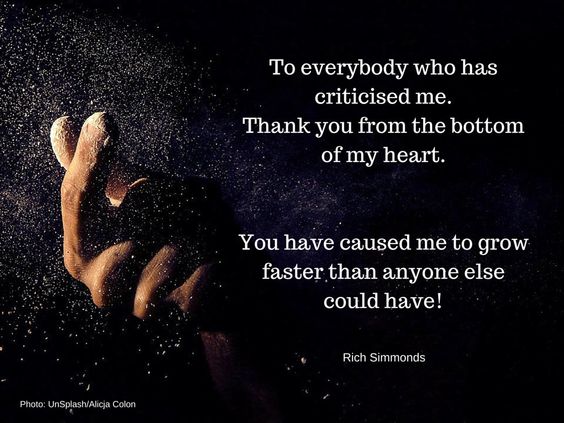
Years ago, I realized I could change my relationship with criticism by changing my perspective. Criticism isn’t comfortable, and we don’t like feeling uncomfortable, so we tell ourselves we can’t handle it. If we take ourselves out of that fear mode, acknowledging that we’re not comfortable but can handle it, it’s easier to decide how we’ll do that. Stressing makes things worse.
In those moments, it also helps to remember we’re not alone—others are going through it or have been through it. I tell myself I’m no less capable of handling it than they are, and it only seems so much worse because it’s happening to me.
Sadly, though, some people fear criticism and rejection so much that they don’t pursue their dreams or find true happiness.
As far as I can tell, we must keep listening to learn. On a personal and professional level, there’s always room for improvement. I am obsessed with learning more and more about things that knocked me for a loop when I had to deal with them in others or myself. I can’t help being grateful for these opportunities and challenges to overcome the obstacles that derailed me.
Falling in love with the process of learning, growing, evolving, and recovering helps us to succeed more and suffer less. It’s about wanting to be the best we can be. It’s okay to be vulnerable, but only as long as we know we are and how! Then, instead of worrying about how others perceive us, we do what we do from the heart. I tell myself this: I’m another person trying to learn and figure things out here. We are transmundane beings in an astounding old universe. We are vulnerable—not merely to the force of nature and random happenings, but to each other. Life gets better when we accept ourselves as a part of everything rather than the center of everything.
I maintain that until we fully heal from whatever we need to recover from, we remain in bondage to something or another and are prone to obsessions. Disentangling ourselves from that is a painful process, but as I witness people becoming who they were before the pain and unwarranted shame, I have no doubt what awareness can do. It tells me there’s hope for everyone.
*Excerpted from my forthcoming memoir, Grateful to Be Alive: My Road to Recovery from Addiction*
Feature image at the top by Stefan Keller from Pixabay
 D.K. Sanz